Monday, 16 May 2016

Call that a breakfast? The diabolical Hemsley sisters and their veggie mania.


Jasmine and Melissa  Aren't we thin?


Now the idea of two attractive young sisters presenting a cookery programme in floaty dresses should be ideal for the Legatus.  But I have just been driven to distraction by watching Eating Well With Hemsley + Hemsley which had its second episode today (note the trendy replacement of the ampersand with a plus sign to make them look like an architects firm or a trendy lifestyle brand  -which is obviously what they want to be). "We can't believe we have our own TV show!" gush the girls on their website.  No, we can't believe it either as your on screen style is extremely irritating, as you twitter around like Kiki the Frog from Hector's House


Kiki the Frog shows what happens to you if you eat too many vegetables


Melissa and Jasmine are half Filipina which explains their slightly exotic look and their insistence on cooking everything in ghee (which used to be considered really unhealthy but is now considered healthy, apparently).  Jasmine used to be a model so had to be a professional twiglet but both look seriously underfed.  Their healthy eating blog/TV show/recipe book is also full of meditation/mind-body interface New Age hippy nonsense. They are believers in biodynamic agriculture; a 1920s precursor to organic farming with added metaphysical and spiritual elements which "embraces the mystery of all life processes, including the subtle and energetic realities that are not necessarily easy to measure or justify using current scientific methods." Hopeless bunkum, therefore. If you can't measure it by scientific methods it's just fantasy!  Biodynamics has the planting of crops guided by the moon's position in the constellations of the zodiac. Three constellations are connected to each element, and each element is related to a part of the plant: thus, Earth – root; water – leaf; air – flower; fire – fruit.  Good grief!

Today, they showcased their "healthy" cooked 'full monty' breakfast.


You can tell everything about this horrific concoction by looking at a picture of it.  A full monty?  Perhaps, if you are a twittering, metropolitan, meditating twiglet girl. There should be no green food at breakfast. Ever! Asparagus?  Spinach?  Seriously?  Even worse, it is all baked in the oven!  Baked spinach with baked eggs on top! Argh! Disgusting.  I am sick of people (such as the Old Bat) banging on about how delicious vegetables are.  You know, they're really not! People eat vegetables because they are told they are healthy, they actually have no sense of taste or they are too squeamish to eat meat.  No one really likes them!  Except girls and that is because they are fixated on being thin, as they worry more about what they look like rather than what they do.  Courgettes, broccoli, leafy green vegetables etc. all taste of water with added iron filings.  Swedes, carrots, parsnips etc. taste like wood.  Ugh!


They then made a disgusting bolognese ragu with far too much grated carrot and served it with cold spiralised courgettes.  They seem to be the leading prophets of the incomprehensible spiralised vegetable movement in the UK. They have their own branded spiraliser, of course. I will not be watching them again!


In contrast, I have been enjoying Rick Stein's cooking series, where he goes to a European city for a long weekend.  He has been to Bordeaux, Reykjavik, Berlin and Vienna.  Stein (unlike the twittering Hemsleys) has a very engaging TV style   He doesn't faff about with healthy cooking methods either.   Taste is king.  In fact the amount of butter he uses alarms even me!  He has a fundamental flaw, though, which to me is as incomprehensible as a love of vegetables.  He has an inexplicable fixation on fish.  It is almost a fatal flaw from the point of view of cooking programmes.  So when he visits somewhere like Berlin or Vienna, which are both meat eating centres, ostensibly he goes back to his kitchen to then cook a local dish from the city he has visited.  But in the last two episodes not having had any fish in the city, he then goes home and cooks fish dishes.  I know he has made a career out of being Britain's Mr fish (who on earth voluntarily eats fish in a restaurant?) but really this is cheating!


Shudder!  Fish and vegetables!  I need to cheer himself up now.  This is a proper breakfast, which I had in February at Morrison's supermarket cafe.  Note the complete lack of green! The banana is to take home to the Old Bat, Another worthless foodstuff, bananas taste like slimy, compressed cotton wool. Fruit is for monkeys!

Friday, 8 April 2016

Corned Beef Curry


This was one of my mother's most complex dishes and often had a smoky flavour as, inevitably, she let the bottom of the pan burn.  Last autumn, I revived this memory of former times at home due to a bumper apple crop in the garden. It is far from a sophisticated dish and bears little resemblance to anything you might eat in India, Bangladesh or even Birmingham but on a cold dark day is quite a solid, cheering meal to eat while watching Eggheads or Great British Railway Journeys.  Anyway, the ability of British cuisine to absorb elements from many other countries is what makes cooking in Britain superior to, the literally preserved in aspic, French cuisine, for example.


There are four core ingredients: apple (sorry), onion, corned beef and, latterly I have added red pepper.  My mother's version didn't have red pepper (try and buy one of those in the seventies and see how far you got) but did include sultanas, something I eschew in favour of peas.  I chop the onions, peppers,corned beef and apple into cubes and gently fry it. Eventually the corned beef breaks down and once the onions are browned you add a tin of chopped tomatoes.  Liberally douse with black pepper and curry powder of your choice (again back in the seventies and eighties you could only get one sort), add a dash of tomato puree to thicken it and after ten minutes or so it is ready.  About five minutes before serving I throw in some frozen peas and maybe a bit of turmeric.


This is foreign food as interpreted by a housewife from over thirty years ago and is very different from the cooking my father did, as he strove for authenticity in trying to cook continental food in the sixties and seventies. 


Even more inauthentically, I chose to serve it with lemon and coriander cous-cous, although of course basmati rice is best, except my doctors have told me to cut down on this, unfortunately.

More about corned beef on my main blog here.

Thursday, 7 January 2016

Dinner at Piquet, Newman Street, London


Piquet is a recently opened restaurant (October) run by Chef Allan Pickett in his first venture (he was previously at Chez Nico, Aurora, Orrery and Plateau in Canary Wharf).  General Manager Alain Morice used to be sommelier at one of the Legatus' favourite City restaurants The Don, opposite Rothschilds in St Swithin's Lane.  When we arrived there I realised that it was literally next door to a previous office of mine although the whole area is currently blighted by Crossrail construction work.  I seem to remember that when I worked there what is now the restaurant was then the entrance to an underground car park.


Upstairs there was a bar but there wasn't a single person in it when w went in or when we came out three hours later.  This does not make the restaurant downstairs look very inviting.  Behind the bar is a rather peculiar painting of a Victorian man and a reclining lady in nineteenth century underwear and black stockings.  To say she is posed in a provocative way is an understatement (perhaps fortunately, you can only see her top half in the picture above).


Downstairs the restaurant was rather odd.  Overlit for my taste and the tables were made of some dreadful plastic (I'm sorry but I do like tablecloths in a proper restaurant).  The kitchen was one of those which you can look into which again, I don't like in case I take against the look of any of the chefs and think "I don't want them touching my food!"


So, not a very promising start (it wasn't my choice) but then we got to the food which was really the best I have had for a very long time.  They have a set menu for lunch and dinner if you order before 18.45 which is a very reasonable £19.50 for three courses.  The mineral water (still or sparkling) that is offered is a flat rate charge of £2.50 a head but it does keep coming.  I went for the a la carte menu and for my first course had pressed suckling pig, prunes, black pudding (fabulous) and cauliflower purée (also fabulous).  This is not big food (it would suit the willowy ladies who work at Elizabeth Arden which occupies, now as then, the ground floor of my old office building), although for a starter, it was more than adequate.  However, my companion's crab raviolo (note the singular) was very small indeed and she said it wasn't as good as the ravioli you get at Latium around the corner.


For a main course I had loin of venison, braised cabbage, quince purée & chestnuts.  It was accompanied by a small faggot (it's an English food, American people!) which was utterly splendid. Again my companion was lessy happy with her choice of seared sea trout but that serves her right for choosing girly, fishy food.  We had a Villa Saint - Jean Pays d'Oc, essentially their house wine, which was very nice indeed and a descoberta branco, Casa da Passarella, Dao, from Portugal which she enjoyed a lot (I only got  a half glass!)


Although after two bottles of wine and small food we were enjoying pretty much everything a lot.  Service was attentive but not overpowering although it was only just over half full so what it gets like if it is busy I'm not sure.

All in all I would certainly go again although probably not at lunch time when I gather it can be very quiet.   With a few tweaks (and I know they have done some already, like turning off the music and I gather the painting's days may be numbered) this could be a very good restaurant indeed.  7/10 (9/10 for the food).

Saturday, 26 September 2015

Breakfast at the Edwardian Tearooms Birmingham Museum and Art Gallery

Birmingham Museum and Art Gallery


This week I was in Birmingham for the first time.  My first long term girlfriend was from Birmingham (well, Edgbaston) and was always going on about how cool and groovy Birmingham was but I had a mental image of grim seventies concrete blocks.  

Victoria Square


I was surprised, therefore by the city centre I found there, which was a mixture of old and modern although I did think it didn't look entirely English.  Maybe a touch of northern Europe about it.  I suppose it is in the north (it really annoyed my girlfriend when I said that Birmingham was in the north, but to me it is).  


I did know that it had an exceptionally good art gallery and that is where I headed after my meeting finished unexpectedly early.  They have the largest collection of Pre-Raphaelite art in the world, including some extremely famous paintings.


Due to my early start I had not had time for breakfast and so even though it was just about lunchtime I went straight to the Edwardian Tearooms in the gallery for brunch. 


I ordered a pot of tea which arrived very quickly.  This was proper loose leaf tea in an enamel tea pot which kept it really hot.  I got a good four cups from this which is pretty good for £2.80.  The tea is provided by Suki and their breakfast tea, which is what this was, is an award winner.  It is a blend of teas from Assam and Tanzania and was quite the best pot of tea I have had for a very long time.


 The cooked breakfast came, oddly, in a soup plate and looks rather small from this picture but that is because the plate was very large.  For £7.95 you got two thick rashers of bacon, two (very good) Cumberland sausages, a large slice of black pudding, a flat mushroom, baked beans (or you could have a tomato) and a fried egg (cooked with a thick white).  Bizarrely they then ruined all this by putting that most worthless of salad plants, watercress, all over it.  Green food should never be included in a cooked breakfast.  Also, I did not notice that if you wanted toast you had to pay £1 separately for it.  So a full cooked breakfast with tea and toast would have been £12.70, which is pushing London prices.  Quality was good though. 7/10 (tea was 10/10).

Friday, 17 July 2015

Tour de France Food and Drink Stages 4 to 9


So, leaving the Low Countries behind, the Tour headed into the heartland of French cycling: Brittany.  On the way it passed through Normandy as well, presenting a few key characteristic culinary highlights.  I looked at some Belgian fare for Stage 4 but the stage actually crossed the border and finished in France.  To accompany my second helping of stoofvleesas I had drunk all my Leffe the night before, I had a pint of Landship beer, as what could be more appropriate for a finish ending in Cambrai?  This was produced by the Dorset Brewing Company for the Bovington Tank Museum and matched the stew perfectly.


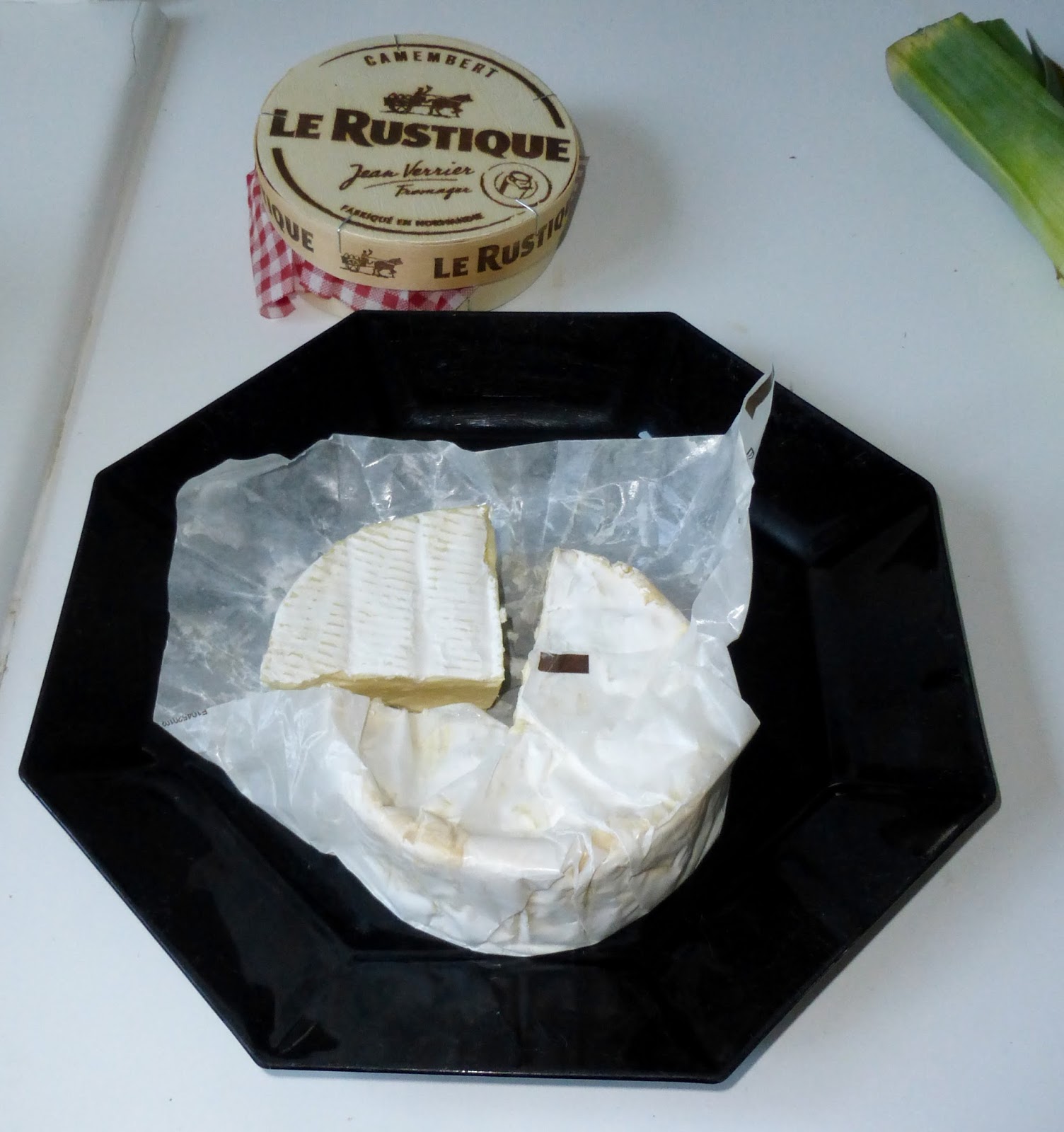
Anyway, Normandy means Camembert.  Unlike medieval Gouda, which I looked at last time, Camembert has a rather more recent history.  Traditionally being first made in 1791 by Marie Havel, who worked at the Manor of Beaumoncel and learned the secret of soft cheese with an edible rind from Abbot Charles-Jean Bonvoust, who had been a resident of Brie.


Camembert (on the left) fuelled French troops during World War 1


Although the story may be apocryphal, Havel was a real person and her descendants certainly made Camembert the world-wide commercial success it later became.  It wasn't until 1890 that the typical wooden box was devised, by one Eugène Ridel, which enabled it to be shipped all over the globe.  Its position as a symbol of Frenchness was cemented in the Great War when Camembert formed part of the standard rations of French soldiers.


As it was in Trinity Square


I sought in vain for my favourite Normandy cheese, Livarot, especially as Stage 7 began in the town.  A cheese with  a longer history than Camembert, I remember eating it regularly with my friend HMS in Chez Gérard in Trinity Square.  At one point they had such a fetching French waitress working there that we went every week just to hear her pronounce "Livarot"; to which she managed, delightfully, to inject several extra syllables.  Fortunately, the manager ensured we were always sat at one of her tables. She earned a lot of money in tips from us.  Sadly, the chain is no more, going bust in 2011 and the eight Chez Gérard restaurants were sold to Raymond Blanc, who has re-branded them as Brasserie Blanc, in which guise the Trinity Square restaurant (overlooking the Tower of London) still exists.


Anyway, to provide some variation I added some French paté and, of course some cornichons which I first had with paté in a restaurant in Normandy on a holiday in the early eighties.


Normandy means cider, of course (I decided that buying a bottle of Calvados shortly before having a regular blood test at the doctor's was not a wise idea).  A few years ago it was relatively easy to get Normandy cider in British supermarkets but that was before the cider explosion of the last few years which has seen many more British ciders on sale but also Irish "modern" types and one ubiquitous Swedish brand.  These have all squeezed out the Normandy product. Even our local Waitrose branches didn't have it but I did get some, eventually, in the Waitrose in the basement of John Lewis in Kingston, which has a specialist wine and beer department.


Stages 7,8 and 9 were all in Brittany so I decided a nice generic Breton chicken dish was called for.  This involved cooking chicken separately in one pan and then gently sauteing cubes of apple, onion and leeks in another pan.  You then return the chicken to the pan and add enough cider to cover everything before letting it bubble away for forty five minutes or so.


Before serving, I added a teaspoon of Dijon mustard and some cream and let it simmer for five minutes.  It went very well with more cider.  Finding Breton cider really was impossible!

Next time the Tour reaches the Pyrenees, a part of France the Legatus remembers from his childhood.


Sunday, 12 July 2015

Tour de France Food and Drink Stages 1 to 4

I


n the last year or so I have taken to trying to match some of the regional food and drink to the stages of the Tour de France when I watch it on TV.  This year, as I am no longer working from home, time is a little short, so my approach has been much more impressionistic (appropriately) than, say, last year when I managed a different beer or wine for every stage.  An added complication this year has been that the start of the tour has been entirely in the north of France, Belgium and the Netherlands which means no wine regions at all.  Last year, at least, after a beery start in Yourkshire and Flanders we travelled to the Champagne region and Alsace. 


Stage 1 and 2 took place in the Netherlands, a country with as interesting a cuisine as its landscape.  Try as I might I couldn't seem to find a typical Dutch recipe other than the fact they eat meat and vegetables.  Great.  No wonder the most interesting food in the Netherlands comes from Indonesia.


However Stage 2 went through the town of Gouda which, apart from Edam, is about the only Dutch food product you can buy in a UK supermarket.  Not all Gouda has to come from Gouda but Tesco's mature Gouda does and very good it is too.  A long way from the mild Edam substitute most supermarkets sell.  Strong and nutty.  Gouda was first mentioned in the twelfth century which makes it one of the oldest recorded cheeses in the world.


Getting a Dutch beer also proved quite tricky (compared with obtaining Belgian beer, for example) but I went for Amstel, not because it is particularly interesting (still better than Heineken, though) but because it has a strong link to cycling in that the brewery is a long time sponsor of the Amstel Gold classic cycle race.


Stage 3 was entirely within Belgium and here I was rescued by Tom Murrath with  a link to a Belgian recipe for stoofvlees.  This was a beef stew with beer and was a very straightforward and delicious recipe, although I simplified it somewhat.  I cooked a chopped onion (the recipe says not too finely chopped) in a casserole and browned the beef in a heavy frying pan.


Once the meat has browned (it needs to fry, not stew, so a reasonably high heat and continuous turning is called for) put it the casserole with the onions and some salt and pepper.  Belgians will add local apple-pear syrup at this point but I left it out, due to its unavailability and the sugar content.  Then deglaze the frying pan with brown Belgian beer.  I sued some Leffe, a beer, I confess, to never having had before.  Once the beer has reached boiling point, pour it into the casserole with the meat and onions.  I added a bouquet garni and topped it up with more beer.


You then need to spread mustard on two slices of dark bread (I used rye bread as I am not supposed to have too much wholemeal) and put it mustard side down on top of the mixture. Then cook on a low heat for three hours.  You can leave the lid off the casserole until the sauce gets thick enough. Belgians add a dash of vinegar at this point which, with the syrup, gives a sweet and sour effect.


In Belgium they serve this with chips and mayonnaise (inevitably) but I don't have a deep fat fryer and, anyway, I'm not really allowed chips, so it was just peas for me.  In fact the recipe is rich enough that it doesn't really need anything else.   This was a really delicious recipe which I will make again.  The meat, after three hours cooking, is really tender and absorbs the bear.  The bread disintegrates nicely and infuses the sauce with the mustard.  I drank the rest of the Leffe with it which was a very fine beer indeed, dark brown with a beige, frothy head; very malty, chocolatey and quite sweet.

Normandy and Brittany next!

Monday, 6 July 2015

Free glass at Waterloo station!


A new Battle of Waterloo monument, dinosaurs and summery young ladies.  It's been all go at Waterloo Station over the last month.  Today we had ladies handing out special Wimbledon Stella Artois glasses.  Well worth taking advantage of!  


Fortunately, I left work early today so I could get home and eat before seven o'clock, as I have a fasting blood test tomorrow.  I suspect they may have run out by the real rush hour.