Friday, 17 July 2015

Tour de France Food and Drink Stages 4 to 9


So, leaving the Low Countries behind, the Tour headed into the heartland of French cycling: Brittany.  On the way it passed through Normandy as well, presenting a few key characteristic culinary highlights.  I looked at some Belgian fare for Stage 4 but the stage actually crossed the border and finished in France.  To accompany my second helping of stoofvleesas I had drunk all my Leffe the night before, I had a pint of Landship beer, as what could be more appropriate for a finish ending in Cambrai?  This was produced by the Dorset Brewing Company for the Bovington Tank Museum and matched the stew perfectly.
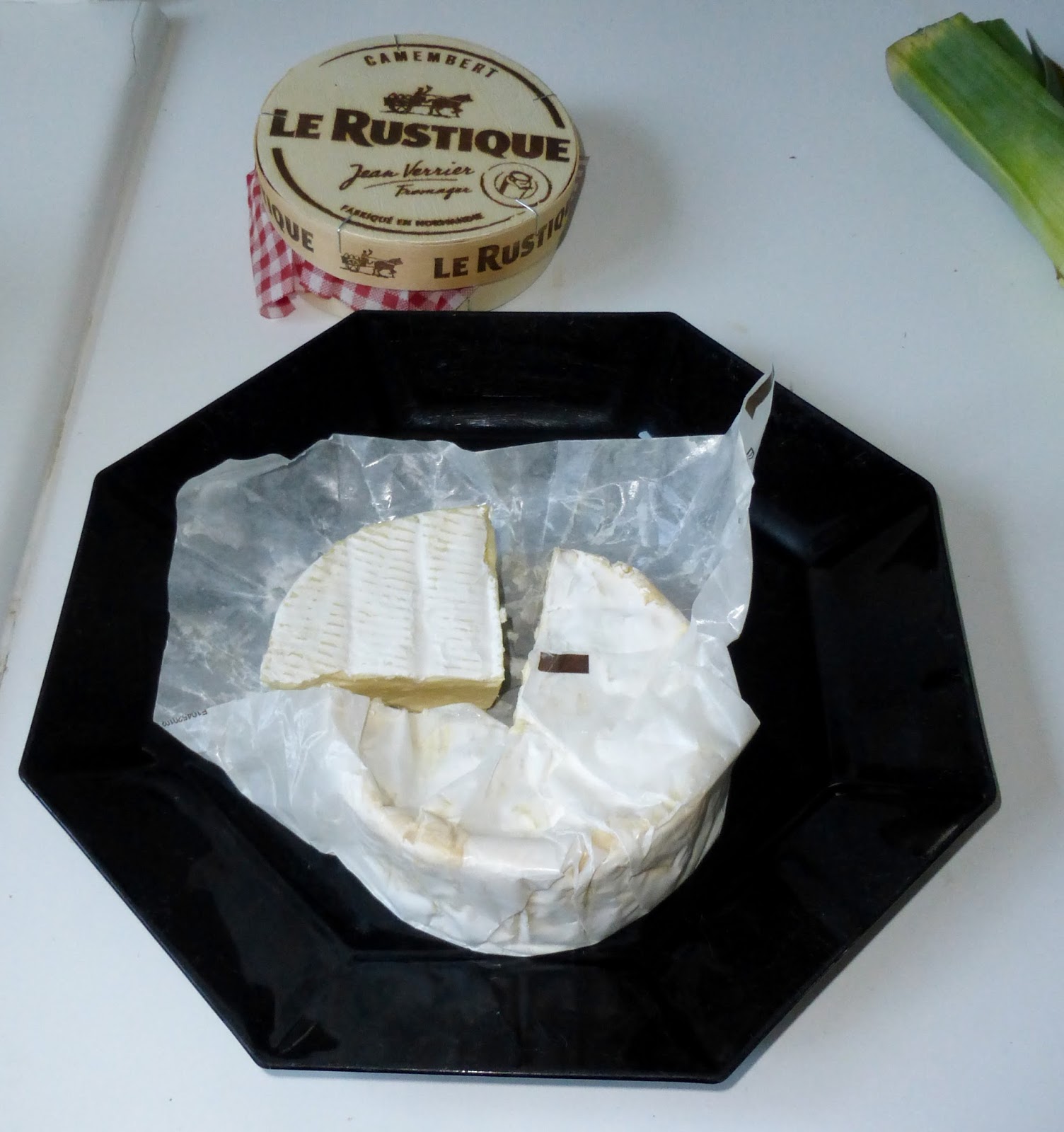


Anyway, Normandy means Camembert.  Unlike medieval Gouda, which I looked at last time, Camembert has a rather more recent history.  Traditionally being first made in 1791 by Marie Havel, who worked at the Manor of Beaumoncel and learned the secret of soft cheese with an edible rind from Abbot Charles-Jean Bonvoust, who had been a resident of Brie.


Camembert (on the left) fuelled French troops during World War 1


Although the story may be apocryphal, Havel was a real person and her descendants certainly made Camembert the world-wide commercial success it later became.  It wasn't until 1890 that the typical wooden box was devised, by one Eugène Ridel, which enabled it to be shipped all over the globe.  Its position as a symbol of Frenchness was cemented in the Great War when Camembert formed part of the standard rations of French soldiers.


As it was in Trinity Square


I sought in vain for my favourite Normandy cheese, Livarot, especially as Stage 7 began in the town.  A cheese with  a longer history than Camembert, I remember eating it regularly with my friend HMS in Chez Gérard in Trinity Square.  At one point they had such a fetching French waitress working there that we went every week just to hear her pronounce "Livarot"; to which she managed, delightfully, to inject several extra syllables.  Fortunately, the manager ensured we were always sat at one of her tables. She earned a lot of money in tips from us.  Sadly, the chain is no more, going bust in 2011 and the eight Chez Gérard restaurants were sold to Raymond Blanc, who has re-branded them as Brasserie Blanc, in which guise the Trinity Square restaurant (overlooking the Tower of London) still exists.


Anyway, to provide some variation I added some French paté and, of course some cornichons which I first had with paté in a restaurant in Normandy on a holiday in the early eighties.


Normandy means cider, of course (I decided that buying a bottle of Calvados shortly before having a regular blood test at the doctor's was not a wise idea).  A few years ago it was relatively easy to get Normandy cider in British supermarkets but that was before the cider explosion of the last few years which has seen many more British ciders on sale but also Irish "modern" types and one ubiquitous Swedish brand.  These have all squeezed out the Normandy product. Even our local Waitrose branches didn't have it but I did get some, eventually, in the Waitrose in the basement of John Lewis in Kingston, which has a specialist wine and beer department.


Stages 7,8 and 9 were all in Brittany so I decided a nice generic Breton chicken dish was called for.  This involved cooking chicken separately in one pan and then gently sauteing cubes of apple, onion and leeks in another pan.  You then return the chicken to the pan and add enough cider to cover everything before letting it bubble away for forty five minutes or so.


Before serving, I added a teaspoon of Dijon mustard and some cream and let it simmer for five minutes.  It went very well with more cider.  Finding Breton cider really was impossible!

Next time the Tour reaches the Pyrenees, a part of France the Legatus remembers from his childhood.


Sunday, 12 July 2015

Tour de France Food and Drink Stages 1 to 4

I


n the last year or so I have taken to trying to match some of the regional food and drink to the stages of the Tour de France when I watch it on TV.  This year, as I am no longer working from home, time is a little short, so my approach has been much more impressionistic (appropriately) than, say, last year when I managed a different beer or wine for every stage.  An added complication this year has been that the start of the tour has been entirely in the north of France, Belgium and the Netherlands which means no wine regions at all.  Last year, at least, after a beery start in Yourkshire and Flanders we travelled to the Champagne region and Alsace. 


Stage 1 and 2 took place in the Netherlands, a country with as interesting a cuisine as its landscape.  Try as I might I couldn't seem to find a typical Dutch recipe other than the fact they eat meat and vegetables.  Great.  No wonder the most interesting food in the Netherlands comes from Indonesia.


However Stage 2 went through the town of Gouda which, apart from Edam, is about the only Dutch food product you can buy in a UK supermarket.  Not all Gouda has to come from Gouda but Tesco's mature Gouda does and very good it is too.  A long way from the mild Edam substitute most supermarkets sell.  Strong and nutty.  Gouda was first mentioned in the twelfth century which makes it one of the oldest recorded cheeses in the world.


Getting a Dutch beer also proved quite tricky (compared with obtaining Belgian beer, for example) but I went for Amstel, not because it is particularly interesting (still better than Heineken, though) but because it has a strong link to cycling in that the brewery is a long time sponsor of the Amstel Gold classic cycle race.


Stage 3 was entirely within Belgium and here I was rescued by Tom Murrath with  a link to a Belgian recipe for stoofvlees.  This was a beef stew with beer and was a very straightforward and delicious recipe, although I simplified it somewhat.  I cooked a chopped onion (the recipe says not too finely chopped) in a casserole and browned the beef in a heavy frying pan.


Once the meat has browned (it needs to fry, not stew, so a reasonably high heat and continuous turning is called for) put it the casserole with the onions and some salt and pepper.  Belgians will add local apple-pear syrup at this point but I left it out, due to its unavailability and the sugar content.  Then deglaze the frying pan with brown Belgian beer.  I sued some Leffe, a beer, I confess, to never having had before.  Once the beer has reached boiling point, pour it into the casserole with the meat and onions.  I added a bouquet garni and topped it up with more beer.


You then need to spread mustard on two slices of dark bread (I used rye bread as I am not supposed to have too much wholemeal) and put it mustard side down on top of the mixture. Then cook on a low heat for three hours.  You can leave the lid off the casserole until the sauce gets thick enough. Belgians add a dash of vinegar at this point which, with the syrup, gives a sweet and sour effect.


In Belgium they serve this with chips and mayonnaise (inevitably) but I don't have a deep fat fryer and, anyway, I'm not really allowed chips, so it was just peas for me.  In fact the recipe is rich enough that it doesn't really need anything else.   This was a really delicious recipe which I will make again.  The meat, after three hours cooking, is really tender and absorbs the bear.  The bread disintegrates nicely and infuses the sauce with the mustard.  I drank the rest of the Leffe with it which was a very fine beer indeed, dark brown with a beige, frothy head; very malty, chocolatey and quite sweet.

Normandy and Brittany next!

Monday, 6 July 2015

Free glass at Waterloo station!


A new Battle of Waterloo monument, dinosaurs and summery young ladies.  It's been all go at Waterloo Station over the last month.  Today we had ladies handing out special Wimbledon Stella Artois glasses.  Well worth taking advantage of!  


Fortunately, I left work early today so I could get home and eat before seven o'clock, as I have a fasting blood test tomorrow.  I suspect they may have run out by the real rush hour.


Saturday, 4 July 2015

Food and drink for the Tour de France 2015


This year's tour is going to be a culinary challenge, given its peculiar route.  Starting, as it did today, in the Netherlands and then going into Belgian and French Flanders before travelling across Normandy and Brittany for the first ten days, Stages 1 to 9 take part in beer and cider regions.  No wine until stage 10!   Even worse the wine regions the route does go through are rather esoteric, starting, for example with Jurançon and, because of the high number of mountain stages this year, lurking in places like Haute-Savoie.


Added to this is the fact that I am now commuting every day so will not have time for extended cooking.  I think it is going to be more of a wine (and beer) and cheese Tour this year!  At least tomorrow is easy as the route goes through the town of Gouda!

Thursday, 21 May 2015

Healthy lunch: Tuna pittas


The Legatus has a positive team of medical advisors attempting to keep him alive for a few more years and at a recent review one of these doctors was urging me, again, to eat more oily fish.  Now, I can't bear fish - it's either rank and disgustingly smelly or completely tasteless which, as a food, makes it pointless for anything other than nutritional purposes.  The point of food is not nutrition but sensual enjoyment, of course.  Fish is the least sensual food there is.  Back in the stone age there were two sorts of humans (no, not Neanderthals and Cro Magnons); those who lived on the coast and primarily fished and eventually evolved (if that is the right term in their case) into the people who now inhabit Iceland, Norway, Portugal Japan and other fishy loving places and those who hunted mammoth and woolly rhinos and got all the best cavegirls as a result.  Yes, fish is girls' food (like fruit - well girls and monkeys for that).  So you can imagine my horror when Dr really-rather-gorgeous at the surgery urged me to eat more fish, especially oily fish.


Regular readers (all six of them) will know that I occasionally make smoked mackerel pate but my mini blender has packed up so I decided to do something with tuna today as it has recently been on offer in the supermarket.  Now from a health point of view the amount of Omega 3 in tinned tuna is considerably less than in fresh mackerel (isn't it awful that I even know this) but its better than nothing.  So I mixed some tinned tuna (which looks and smells like catfood -although not as much as Gentlemen's Relish) with some super low fat mayonnaise and plenty of black pepper to help take the taste of the tuna away somewhat.  Put it in some toasted brown pittas with some cucumber and I feel very virtuous!

Wednesday, 8 April 2015

La Tasca, Leadenhall Market


The Tapas Bar, as it is known to the Legatus' friends and contacts, has served as my City office for some years.  It forms the top two floors of 27 Leadenhall Market and has excellent views over the market below.  I have been going there since it was just called the Leadenhall Wine Bar in the eighties. Then it became the Leadenhall Wine & Tapas Bar, then Ortega and is now a branch of the La Tasca tapas bar chain. 


It changed to a La Tasca last year and, of course, endured some poncification but in fact, as Ortega, had been owned by Tragus, who also own Cafe Rouge and Bella Italia, since 2007.  Now it is Britain's only Rioja bar, offering 19 different red, white and rose Riojas from Marques de Morano, at 18.95 a bottle to the Decanter magazine gold medal winning Viña Pomal Alto de la Caseta at £90.00 (which comes in its own wooden case).


As it used to be

For a number of years, in its Ortega incarnation, I went there so often (at least twice a week) that they let me go in there before they opened, to work, charge my phone or have a cup of tea.  I actually got 20% staff discount too!  As a result I introduced it to many other people and it was one of those I had lunch with this week; my Czech friend I.  She is always good to have lunch with as she doesn't stint on the wine or food, unlike the two girls who sat next to us who ate a small salad between them and shared a glass of wine.  Good grief.


Roser


Now the old Ortega was run by Poles.  Most of the waitresses were Poles and there were rather too many waiters for my liking.  Some of them, Agnieszka and Ulla (in particular), were quite lovely but more recently the standard and number of young ladies working there had dropped, much to my friends and my chagrin.  Under La Tasca's control, however, there are many more nice, and largely Spanish, waitresses there again.  I remember taking some Argentinians there once and they were appalled by the fact it had Polish waitresses.  Anyway, we had the cute Roser from Majorca and very friendly and efficient she was too.


Now I was on a diet (not a very serious one) but the sort that means she feels that if she adds vegetable tapas, like green peppers and mushrooms it will be healthier.  Unfortunately, then having a bottle of Faustino V pink Rioja followed by a bottle of  white Rioja rather offset the attempt at healthy eating.  One thing I have to say is that although the Tapas menu is smaller than it used to be, the quality of the food has much improved.


A lot of restaurants in the City are subterranean (such as the nearby rival Barcelona tapas bar) but the good thing about the main floor at La Tasca is that it has windows on two and a half sides so it is nice and bright.  If you get a table by the window you can spy on all the brokers and brochettes from Lloyd's outside the Lamb Tavern opposite.  Very good for people watching!


Leadenhall Market in 1881


Since the fourteenth century Leadenhall Market used to be the main poultry market of London, as Billingsgate was for fish and Smithfield was for meat.  When I first worked in the City many of the shops were boarded up and it was still mainly butchers shops.


At Christmas they used to hang fresh turkeys on hooks outside of the shops (I can remember some American visitors being shocked by this) and while the hooks remain, the butchers have gone.


The  Tapas bar is on the top two floors of this building

Today it is full of trendy restaurants and clothes shops.  It is built on part of the site of the old Roman Forum which was the biggest Roman building north of the Alps.  In the sub basements of some of the buildings you can still see some Roman brickwork.  The current building was erected in 1881 and has been beautifully restored, compared with the rather shoddy look it had back in the nineteen eighties.  Its Victorian splendour is popular with film makers and it appeared in the first Harry Potter and Tomb Raider films, among others.

Friday, 27 March 2015

Cassoulet


To celebrate the fact that I have now had, rather to my surprise, a thousand views on this blog I am posting a piece on the first foreign dish I remember having (or was that B from Rhode Island at college?).   This is a dish I cooked during the Tour de France last year (although it is really a winter dish) but didn't have time to post it on my blog.

As I have related before, I was taught to cook by my father, who was very keen on French food at a time it was still regarded with suspicion by most people in Britain.  We used to holiday in France every year and, from 1965 until 1973, we used to spend the summer in the Languedoc-Roussillion.  This, of course, is prime cassoulet country and after the leisurely three day drive down, from Le Havre to our house not far from the Spanish border, my father would take us out to many different restaurants in the region looking for the perfect cassoulet.  This he eventually found in the town of Castelnaudary.   TV chef Rick Stein (whose programmes I usually don't watch due to his inexplicable fondness for fish) did a whole programme from the town, a few years ago, focussing on cassoulet.  To get to our house you had to drive along the main road which went through Toulouse, Castelnaudary, Carcasonne and at Narbonne we would turn south for the last part of the drive.  All of these places produce excellent cassoulet.  

There is a military link to cassoulet in that the story goes in France that during the Hundred Years War the English laid siege to Castelnaudary and the locals grabbed whatever they could to make a huge stew for their defenders who were so fortified  by the assemblage that they saw off the English.  This is almost certainly French patriotic nonsense, especially as the Black Prince sacked Castelnaudary in 1355 and massacred the inhabitants.  Another story suggests that it evolved from Moorish mutton stew which crossed the Pyrenees from occupied Spain. Certainly the distinctive bean element was more recent as they were brought back from the Americas after Colombus.   Catherine de Medici organised imports of white beans and they were grown extensively in South West France.


The recipe my father used to use back at home was from one of his many sets of Robert Carrier cookery cards.  These wipe clean handy sized cards came out in the late sixties and I think we had them all (I still have them).  Common though it is now to see a recipe paired with an enticing looking photograph of the finished dish, in those days, when cookery books didn't have colour photographs and foreign recipes were not the feature of (still black and white) newspapers as they are now, it was very unusual.

Cassoulet's name comes from the French form of the Occitan word caçòla which is a truncated conical earthenware pot. Like all such dishes, there are arguments about the exact ingredients and this is complicated by the fact that there are regional variations.  Basically the dish is one of white beans, sausages and duck or goose in a tomoato sauce.  In Toulouse, extra mutton and pork is added, in Carcasonne you get more mutton and sometimes partridge and in Castelnaudary duck.  I decided to make the duck version.  This was a quick version and does not involve having to prepare a confit (slow cooked meat preserved in fat).  You used to be able to buy confit d'oie in Waitrose but I haven't seen it for some years, probably because everyone who bought it has died of blocked arteries.  Goose fat is available at Christmas, at least, in most supermarkets but my doctors wouldn't be very impressed if I used it!  The Robert Carrier version uses lamb with the preserved goose but I eschewed that as I think the lamb is too strong for the dish and clashes with the duck.


I can't be doing with all this soaking dried beans overnight nonsense so used tinned white haricots.  First, I gently fried an onion with some thyme (important), a bay leaf and garlic adding the smoked bacon and then the beans once the onions and bacon have cooked.  Then heat them together for a few minutes while seasoning with black pepper. It's a good idea to leave some of the bean liquid in to keep it wet.  I removed the bean, bacon and onion mixture and then sauteed the duck pieces (this is where those without high cholesterol could use goose fat).  I grilled the sausages.  Getting a good approximation of Toulouse sausages is certainly a lot easier now than it was in the sixties and seventies.  I used the Waitrose ones.  Again, you should pan fry them in butter but grilling is much healthier.


Cut up the meat and sausages and put them in a casserole with the beans and onion mixture.  To be really authentic put the duck or other meat at the bottom then add the beans with the sausage on top.  Cover with a tomato sauce, which I made with chopped tinned tomatoes and a couple of big squeezes of tomato puree.  You can put breadcrumbs over the top for an authentic crusty effect.  Cook for at least an hour and a half in a medium oven.  I had it with a Côtes du Roussillon from the region around where we used to stay. Minervois, Corbières and Fitou would be more upmarket regional choices (although not when we used to go down there in the sixties and seventies as the local wine was horrible).

This is the sort of meal you really don't need a lot to accompany it.  Have a salad and pretend that it is healthy.  Across the Pyrenees there is a Spanish version of this dish, which I will look at another time and which I cook much more often.